
Give honey: how to make an apiary a profitable business
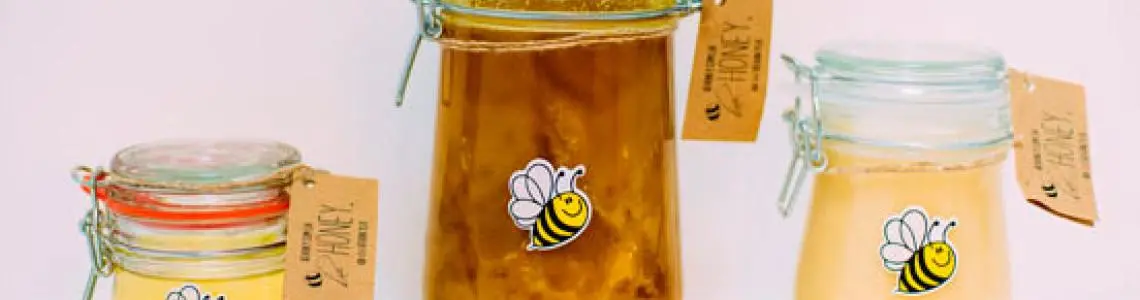
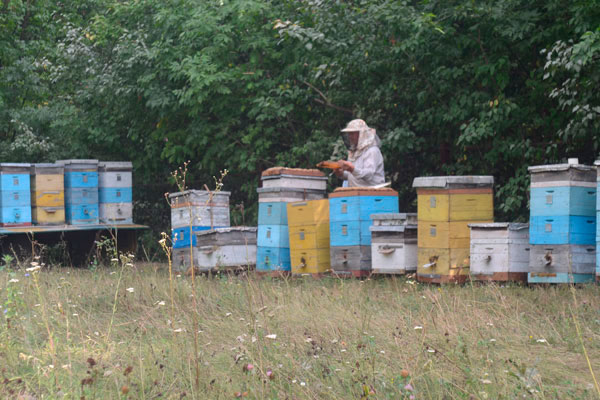
Ukraine annually produces more than 70 thousand tons of honey, but, according to various estimates, about 90-93% of production is in the hands of small farmers and amateurs. Roman Baka, a former bank employee, decided to change the established notions about standard market honey, as well as to help his grandfather do modern business in the old apiary. But he made honey as a gift when he started making honey sets under the Be Honey brand.

Tell us why you decided to trade in honey?
- My grandfather has been keeping an apiary for over 35 years, and two years ago I decided to help. He has 100 beehives near Bila Tserkva, but none of our relatives was eager to learn from the experience and help with sales. So I plunged my head into a new specificity. Previously, my grandfather sold honey only to friends and at the local bazaar, and I decided to certify the products and pack the honey in jars with labels and tried to offer it in stores.
I used to work in a bank, but I wanted to do something much more than be an employee. I resigned and took special courses for start-up businessmen at the labor exchange, receiving a one-time assistance for starting a business of UAH 32,000. Everything looked simple - I had honey, I had free time and a head on my shoulders to sell it.
But from the beginning I made a mistake: I had an acquaintance who ran 40 small meat and sausage shops and I gave him honey for sale. It would seem that everything turned out perfectly - you can already count the future money. Two months later, I discovered that my honey was not for sale at all. Because people come first for sausages, not for sweets. I took the products, started to go on my own to local farms and health food stores, offering to take my honey for sale. Almost 90% of stores refused, arguing that honey is not something original. He began to think how to deal with this situation. Already at this stage I realized that it would be very difficult for me, as a small producer, to work without special investments. Having invested 3-4 million hryvnias in honey production and uploading it to one of the largest Ukrainian retail chains, I would definitely work "in the black". Since there was no such money, I needed more "profitable" ideas.

Example?
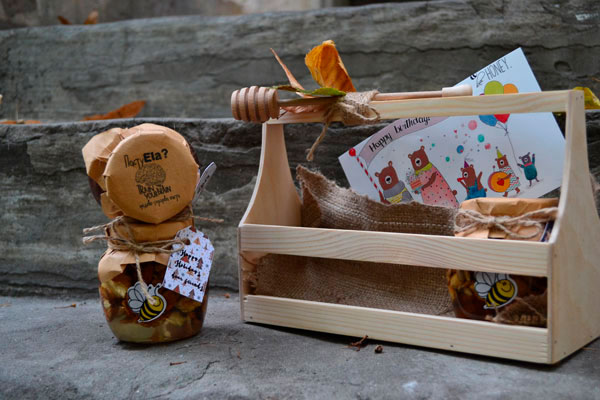
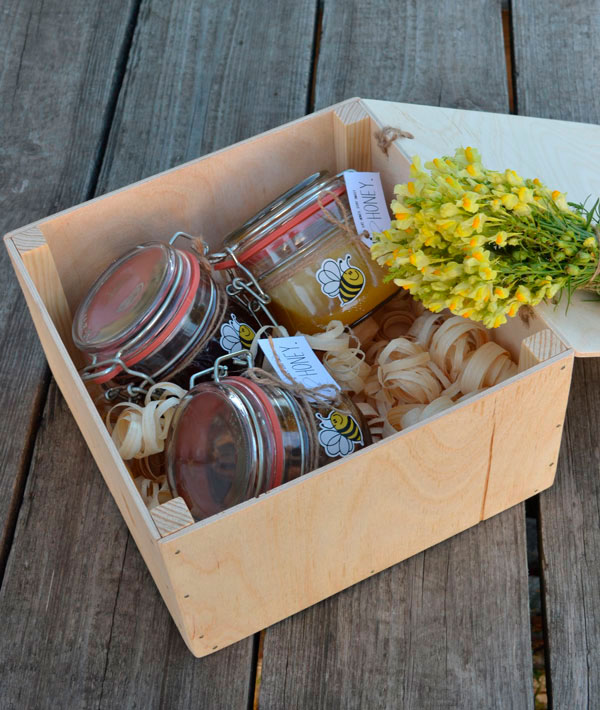
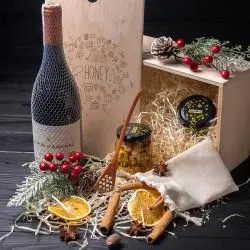
- I went to the sites of American honey producers and saw that there are very popular gift sets of honey and jams for different holidays. So I realized that you can really "play" on it. My father has a small carpentry workshop near Kyiv, he makes furniture to order. Making special wooden baskets for such sets is not a problem at all. In this way, the two family businesses merged into another business.
How did you decide to sell these honey sets?
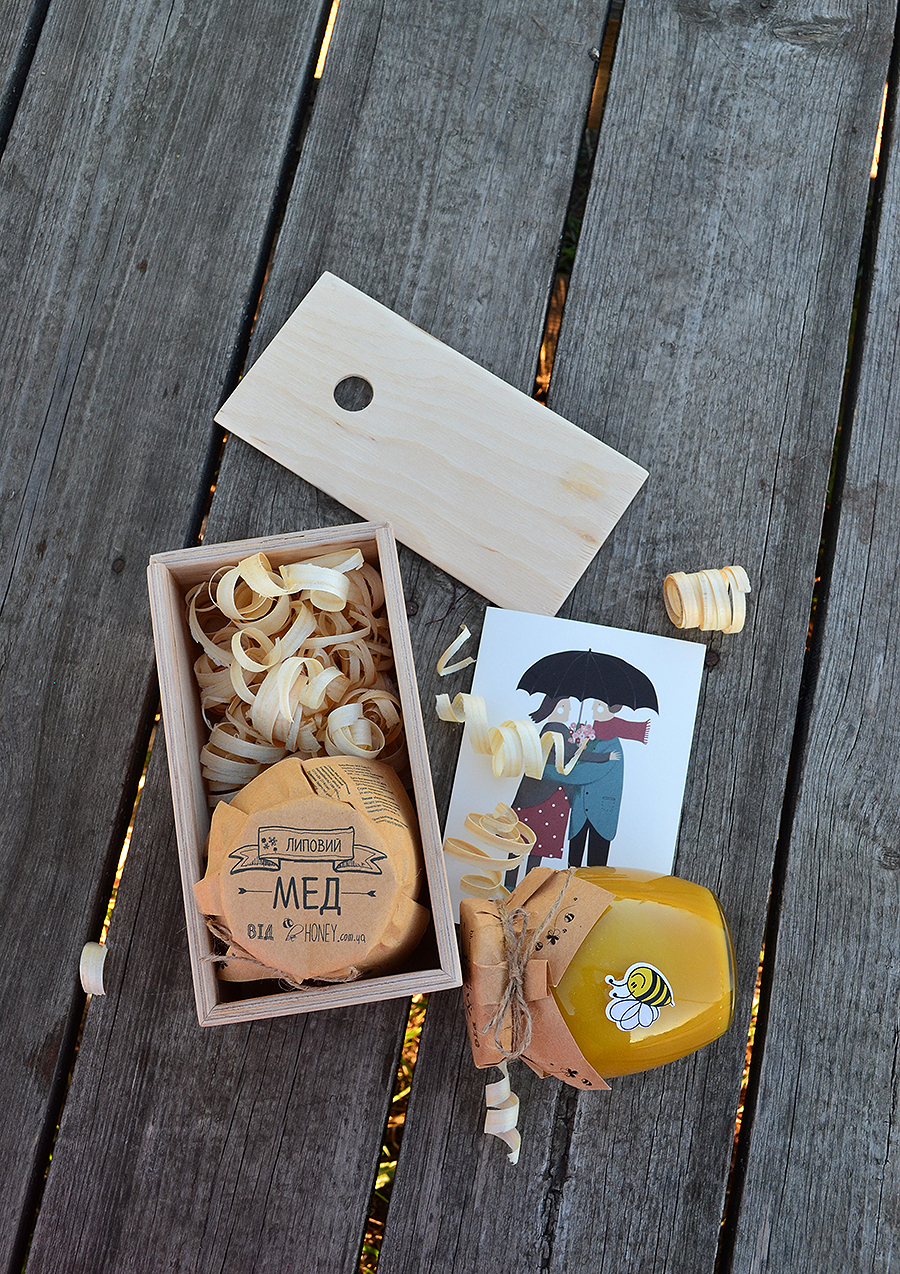
- I started calling various companies and offering our gift sets as corporate gifts. There were many failures, but our first big customer was the well-known company Baker & McKenzie. We made 150 gifts for them, after which I discovered that this is the perfect way to establish a highly profitable business. Then more than 15 large companies became my customers. I understood well that honey is a gift that will suit any occasion and situation. After that, we made similar sets for the New Year, Valentine's Day, and a few weddings as a gift to guests - everything was received with a "cheer".
In addition to the usual types of honey from acacia, linden, flower, we began to make honey mixes - with chocolate (like "Nutella"), different types of nuts. By the way, they are very popular with our customers.
What are the difficulties of working with corporate orders? What is the price of the sets?
- In corporate orders, the biggest challenge is to do what is ordered on time. There is no problem with honey, but I had problems with the appropriate packaging, decor, tags. Because especially during the holidays, printing companies are overwhelmed with work, they are not interested in small batches of labels. So I realized that you need to make the most closed production cycle. I invested another 50 thousand hryvnias and bought a small printing complex. Now we can quickly make all the necessary packaging. Conventionally speaking, your order may be ready the next day. And efficiency is one of the important components of the service. Today I have no problems with customers, I will say even more - I plan to increase capacity. All in all - honey, wooden packaging, own labels allow you to save a lot, and invest more in business development. Today the cost of one set of honey starts from 270 UAH.
Have you tried to copy your ideas with sets?
- Yes, this cannot be avoided. On the other hand, this is not my idea, not my know-how. So you just have to be ready, and when a competitor "breathes in your back", you need to offer the market new and new ideas. Do better, faster, more interesting. I am already actively preparing for the autumn season, it will be completely new products based on honey, which have not been tasted in Ukraine so far. So competition is a big incentive.
How do you plan to develop your business in the future?
- Since my grandfather is already 73 years old, and I can't fully take over his job, I decided to go the other way. I want to help beekeepers, my grandfather's colleagues, run a business and sell honey at a fair price. It is not thoughtless to buy it, namely to teach our ordinary manufacturers to build a brand and unite with a common idea of sales. For example, there is a trend of local food in Europe now. When a person, coming to the manufacturer, buys a product produced in a particular region, city or even village. Therefore, if submitted correctly, it can be a good start.
The "trick" of the project is to tell on the label on which farm, where and when this honey was produced, what are its features, what plants it is made of, etc. I'm sure these sales models can work in Ukraine, people are interested. I see that because our company's honey is tasted as a corporate gift, it is easier to sell it in stores because the product is already known.
Market for small
How difficult is it to start in the honey business? What initial investments are needed?
- I will say at once, if you want to start making honey, the first thing you need to do is go to the village, find a beekeeper there and spend the whole summer there, learning from experience. Without understanding all the processes, it will be very difficult for you to build communication with your customers. In addition, I would separate production processes and sales. In my opinion, a beekeeper should only be engaged in production, as my grandfather does. He needs a person like me who can sell this product and build relationships with retail, traders.
The business itself, in terms of investment, is expensive. One hive can cost up to a thousand hryvnias. One can for honey now costs more than 800 hryvnias, for a ton of honey you need to buy cans for 16 thousand hryvnias. As a startup, the honey business is not so quick to pay off. I was lucky that I already had all the necessary base, all that remained was to organize everything correctly.
How serious is the competition?
- I did not call our honey segment too highly competitive. Conventionally, all competitors in the honey market can be divided into three categories. The first is those grandparents who have their own apiary in the village and sell it to acquaintances and friends, or in the bazaars. The second is producers who buy honey from beekeepers and sell it abroad, and what they fail to sell is sold domestically. And finally, the third is producers who have a little more than 200 hives, collect, pack honey and sell it in retail chains. They usually care more about product quality, have certificates and pay income taxes.
Keeping your own apiary and bringing honey to the local bazaar is not a business. Globally, there is no player in Ukraine who is ready for large-scale honey production. With dairy farms in this regard is easier: you can buy a few hundred cows, then increase the number of cattle and collect the right amount of milk and be considered a very decent producer. But with beekeeping everything is different. Ukrainian beekeeping is, for the most part, amateur beekeepers or small farms that have apiaries. If the manufacturer has two or three thousand hives, it is already a lot, but it will not cover the global need for the product. Similarly, it is still very difficult to form a normal export batch of honey. Moreover, no one is trying to calculate how much honey is produced in Ukraine. There are customs statistics - how much we take out of the country, but how much is left, eaten and poured within it - no one knows.
Prohibited substances, including antibiotics, were found in our honey during export. How do you feel about that?
- It is quite clear that domestic honey is exported and popular abroad. Another question is how legally it is imported into the EU and exporters are ready to say that it really is of Ukrainian origin. How is honey exported in general? For example, a Pole comes, opens a representative office in Ukraine, buys honey from producers, then exports it, stamps a label, and then it is no longer a Ukrainian but a Polish product. I was also in Hungary last year and saw acacia honey being sold there in local markets and even in some supermarkets. A kilogram of such a product cost UAH 270 per kilogram, while in Ukraine, at last year's prices, it was about UAH 180 / kg.
But in fact, acacia in this country grows very rarely, so to produce honey on such a scale is simply unrealistic. So where do they get it from? That's right - illegally, from neighboring Ukraine. So there were a number of stories about the quality of Ukrainian honey, but it was the same with honey from other countries. As for antibiotics, they are used by almost all major honey producers. If you have 100-500 hives, it is difficult to look after the health of bees, but it is possible. But if you have many more families, it is difficult to do without antibiotics.
In your opinion, the average honey producer should still focus on the domestic market, or still think about exporting products?
- The apiary for 200 bee families can be served by 3-4 people per season. If properly automated, investing an amount of about 10 thousand euros, then even two people. Such an apiary can produce a total of 6 tons of honey and this is enough for one delivery. However, add to the cost of transportation, expertise in accordance with European requirements, and so on. In addition, it is difficult for the average farmer to understand the export documentation, the specific requirements of retail and the country of destination. If it's easier - due to an incorrect tick in the documents, your product can simply be sent back.

It turns out that such one-time deliveries will take much more time and effort than the benefits received. Six tons of honey can be withdrawn, but the cyclical supply, stable quality, ability to communicate and be flexible in terms of refunds for the goods are important. All this art, which can be quickly mastered by our manufacturers. Therefore, today the only way out is to cooperate with other manufacturers and form an image in the honey arena. A large volume of products will make it possible to dictate more conditions and not depend on one customer, easily redirect products and distribute it. In addition, it is best to sell honey in packaged form and not just as raw material. So there will be fewer questions and you will be able to be more confident in the quality of each individual party.
However, the cooperation will supply honey of different quality, from different producers. How to be in this situation?
- As a rule, honey producers in large batches are simply mixed, so it is unrealistic to distinguish from each other. In addition, the so-called farm honey can never be the same, even from one apiary, but in different hives, it can be significantly different. Honey is a specific product, it is not plastic windows that will be the same in each batch, so consumers understand this well. Honey is valued because even over time it becomes different, adds other notes of flavor.

Related Products
Leave a Comment